Didn’t have time to look at the prosery prompt yesterday, but this morning it made me think of the premise of Elsa Morante’s novel, L’Isola di Arturo, Arturo’s realisation as he comes out of boyhood, that his father’s marriage to a poor Neapolitan girl was a sop to respectability, and a front for his homosexual adventures.
Mother love
She always knew, that much is obvious now, the things my father got up to during his long absences. Though ‘knew’ is probably too precise a word. His longings and desires, what drove and embittered him had no echo in my mother’s constrained, traditional upbringing, which was mine too, until understanding dawned, and I broke away from its traditions of suppression and oppression.
Yet despite time and distance, her face follows me, dark-eyed and full of love, the same gold earrings because it would never have entered my father’s mind to buy her anything pretty, the embroidered headscarf, hands busy with work that always found the time to caress and comfort. Sometimes I feel that I am haunted. By how much our mothers do, not know, is surely how we should judge them? She loved me enough for two. That’s all that should matter.

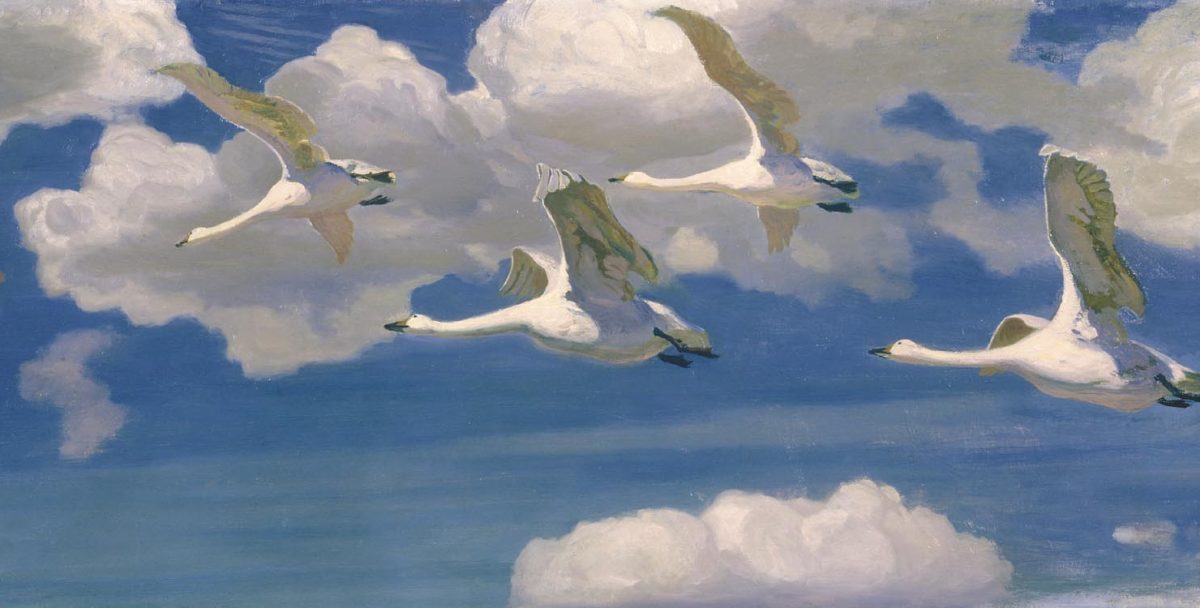
 The Four Swans
Beautifully done
LikeLiked by 1 person
Thank you xx
LikeLiked by 1 person
Awesome.
LikeLiked by 1 person
You’ve done an excellent job breaking up the line, Jane. I like that you let the novel inspire your writing.
LikeLike
This is a real eye opener 💜💜
LikeLike
Though a sad and painful story you tell …. the composition is amazing! Well done.
LikeLike
Strong sadness, yes, but a beautiful testament.
LikeLike
As much as we hope that those old-fashioned relationships are long gone, in which the father gets up to all sorts and the mother has to have the strength to put up with it while at the same time being the one to give all the love to the children, they still exist. I love the way you punctuated the prompt line, Jane.
LikeLike
I lovce how you broke the line (I did it a little bit different). Your theme resonates with me, and both our stories tell something about absence of fathers.
LikeLike
This is just brilliant, Jane! I love where you went and how you broke up the line.
LikeLike
Thanks Dale. Mothers seem to take all the flak when a child goes wrong, but what happened to fathers?
LikeLiked by 1 person
So true! What is up with that?
LikeLike
The woman is always wrong/evil
LikeLiked by 1 person
True.
LikeLiked by 1 person
I love this, Jane!
LikeLike
Thank you. It’s a great novel.
LikeLiked by 1 person
It is. (K)
LikeLiked by 1 person
I thought I had read your prosery, but I missed it.
I know of, but haven’t read her novels (yet). This is so poignant, and I like the way you broke up the line. I like the adult son’s realization. I think we often do not realize things about our parents until we’re grown.
But also, I’m glad things have changed–at least in some places.
LikeLike
Elsa Morante was a tremendous writer. There’s a real wealth of Italian post-war literature. that hasn’t aged at all.
Yes, children see their parents as ‘parents’ not at people and it needs maturity to understand when they don’t fit the stereotype.
LikeLiked by 1 person
Yes, I’ve only heard good things about her writing.
And I think you’re right about how children see their parents, and how we have to mature to see them as people.
LikeLiked by 1 person
Beautifully penned!
LikeLike
Thank you!
LikeLiked by 1 person
another sad one (to me), but beautifully written– and i love how you changed the punctuation.
LikeLike
Thank you xx
I always try to break up the line. It’s poetry after all, and it belongs to someone else.
LikeLiked by 1 person