Haibun for an October day

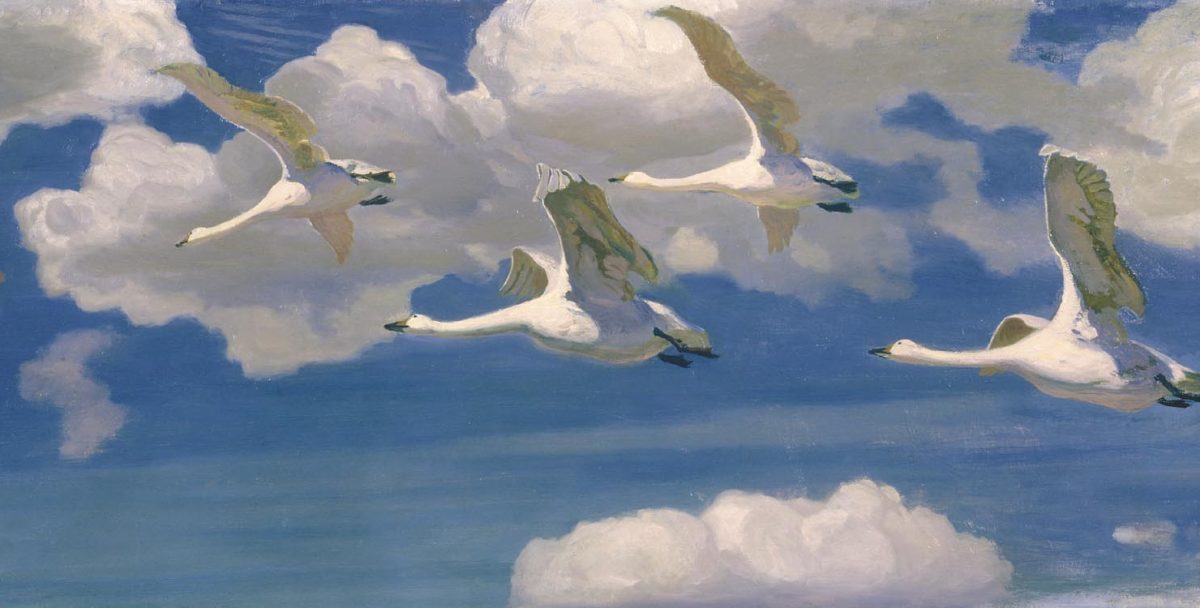
There were so many birds yesterday’s half-clouded afternoon, flocks and flocks swirling in dark clouds or stretched out in skeins, and the lonely honk of a stray goose separated from its companions. There were powerlines and telegraph wires strung with dark fluttering beads of starlings and fieldfares, new-ploughed fields skimmed by wild startles of pigeons and doves, the hedges atwitter with redstarts and chaffinches. But the half-clouded sky was half-sinister with the slow, deliberate martial movements of the red kites, broad wings beating slow, rising and falling, following unseen prey. Too many to observe, enough, fearless, to make us want to hide beneath the overhanging boughs of the wintering trees.

Come home the night
is dark beneath these wings
the cold glare of hawk eyes.

Haibun for autumn leaves

For dverse

The light is the thing, the transformer, that changes dull, rain-slick, brown leaves into flakes of flame. Yesterday the world was grey-green, the dull green of ditch weed, the shadows beneath wet trees, the pewter grey of slanting sluices of rain. We trod layers of rotting vegetation, unrecognizable leaves, almost-peat, slippery and treacherous.

Today, in a sky too blue to look at, a brilliant sun sears, unobscured by the slightest wisp of cloud. Yesterday’s leaves flake away from one another, drift dry in the warm breeze, gold, orange and red, filling the balmy air with butterfly-flight, memories of summer.

A day of hot sun
and sudden bees butterflies
a wren cries summer.

Haibun for a brief encounter

She asked me where I was from, then said, with a smile, all teeth (I will remember every one), that she had just read a book about the Famine and it was interesting. She waited for a reply, with her smiling teeth, yellowing but even, the smile growing questioning in the silence. How do you smile in the same breath as mentioning the interesting death of a million human beings, another million exiled, displaced, walking skeletons? What did she want me to say? ‘Yes, it was a fascinating period of history.’ I couldn’t reply, to the smile, the teeth, the expectation of a smile in return. Such lack of empathy made my blood run cold.

Church amid fields
beneath an indifferent sky
crows turn stones and bones.

Haibun for something lost

For dverse

These days, too red-gold at evening, too crisp at morning, are too short and cooling fast. The spring was damp and dull green as river weed, the summer late, stop-starting like blackbirds running. We lived too fast the time of high skies and heat, not time enough to watch the nestlings fly, the new fawns play. All done now, another year turns, sliding down into the russet-red crisp leaf-fall of autumn.

Remember the blue
white-clouded gusting with wind
there were cranes then.

Haibun for a new kitten

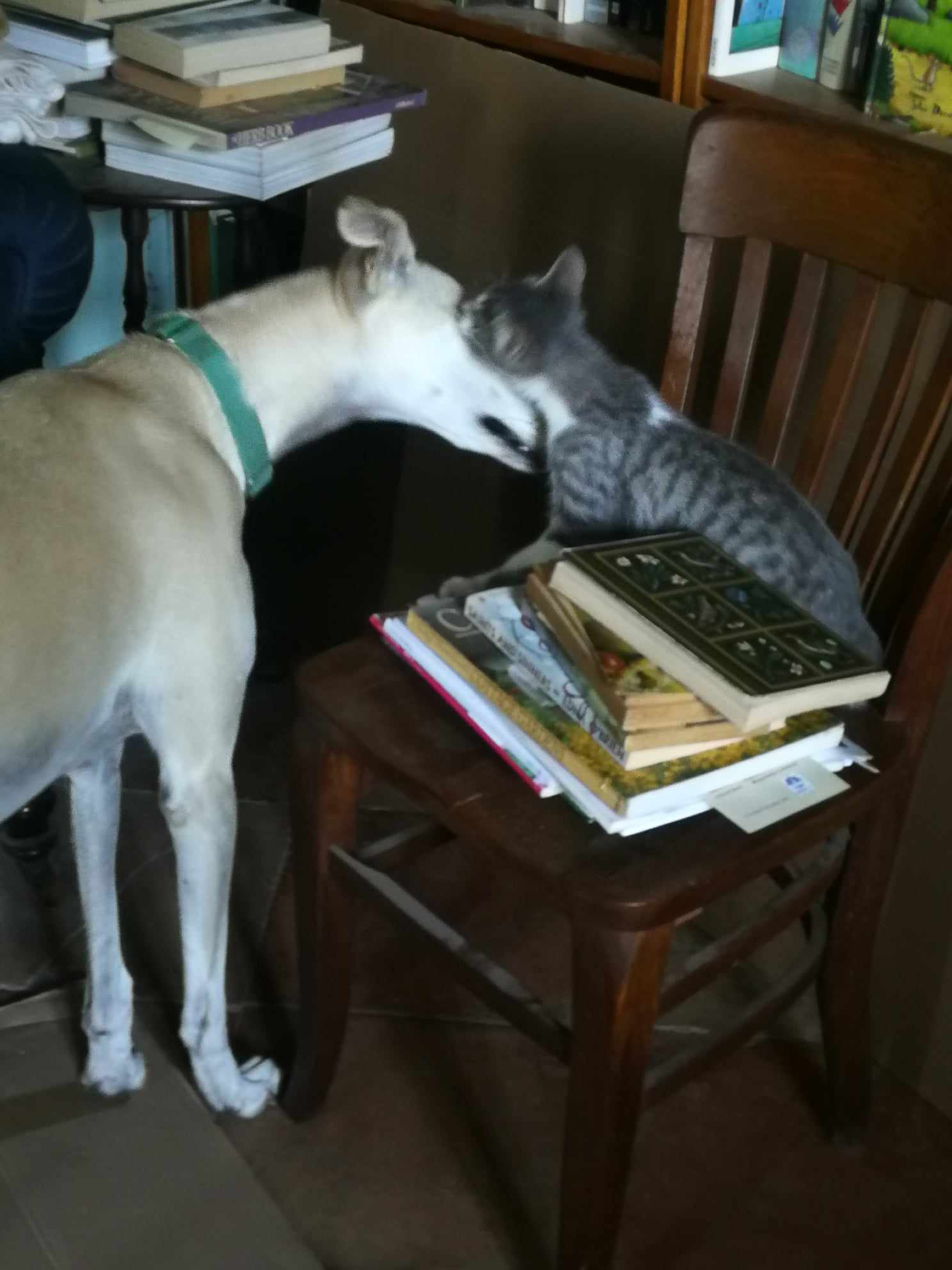
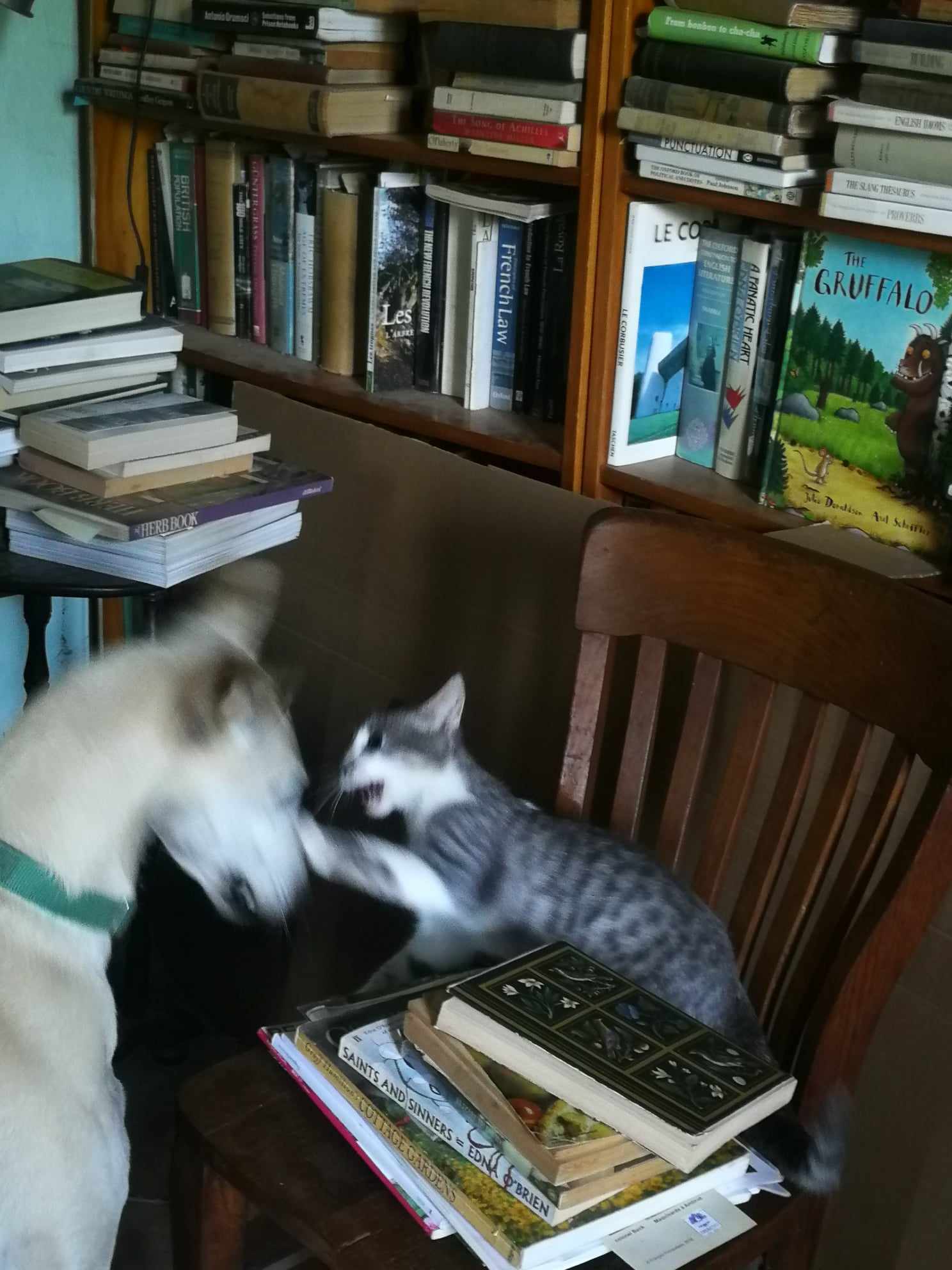
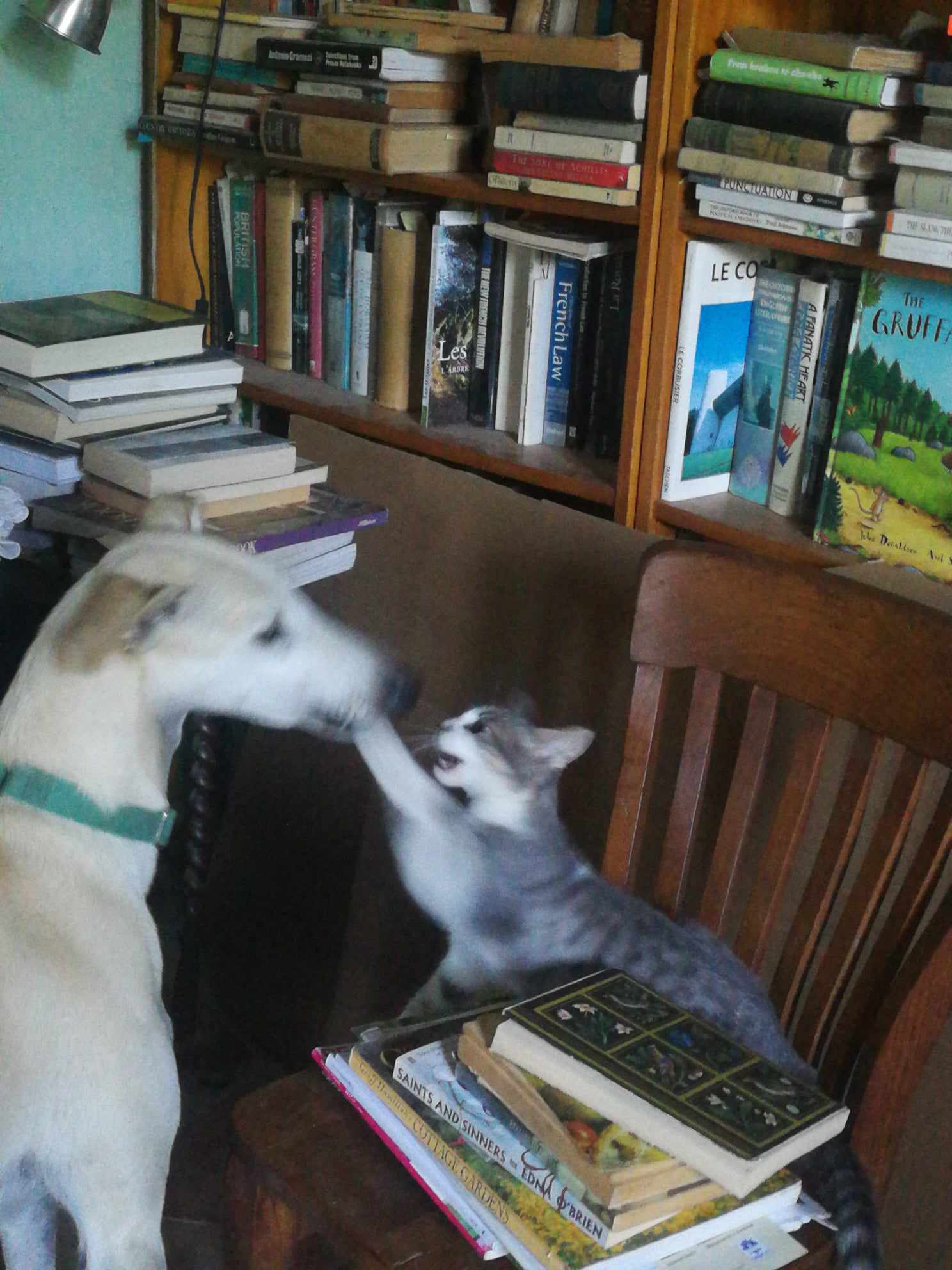
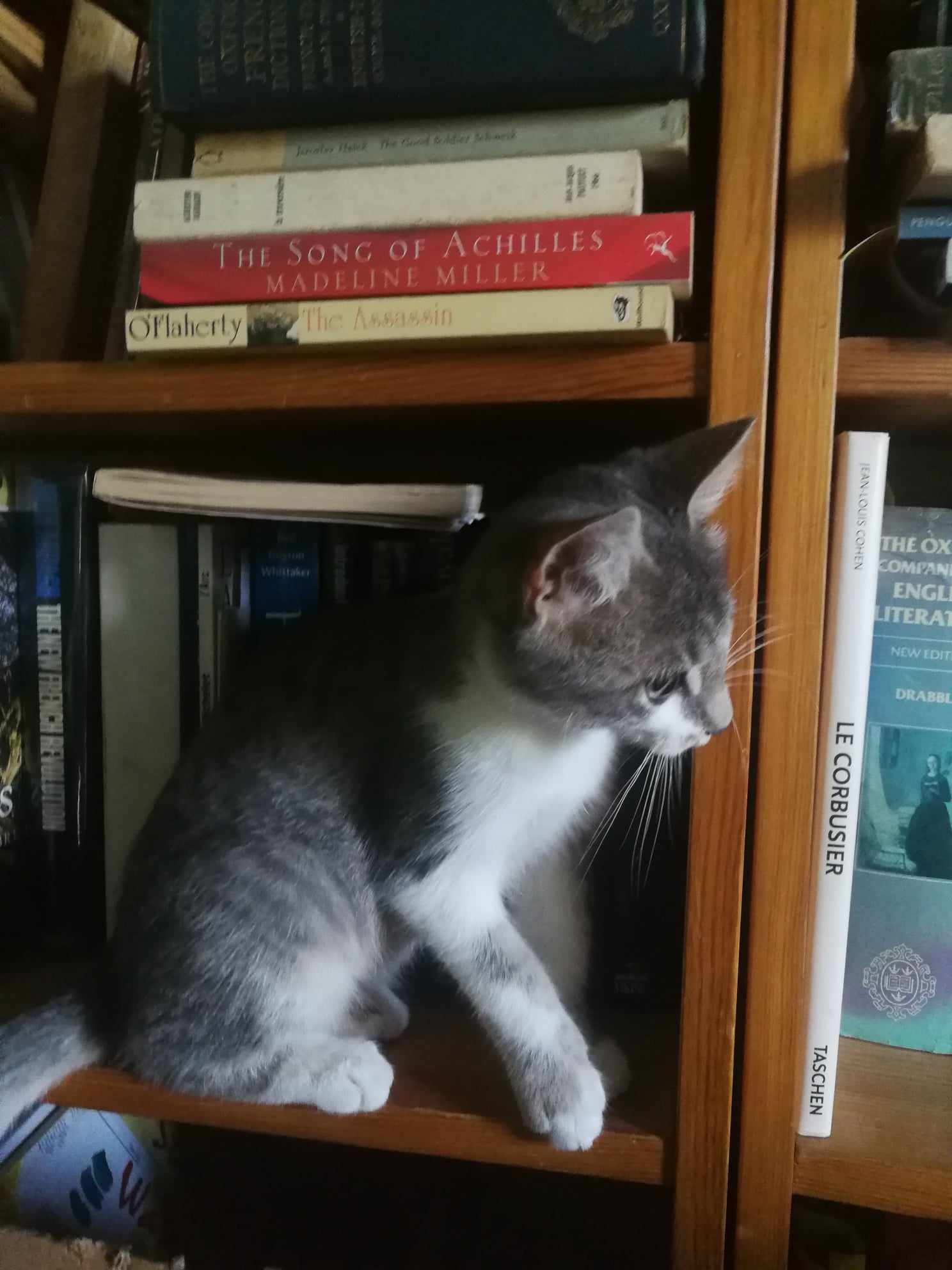
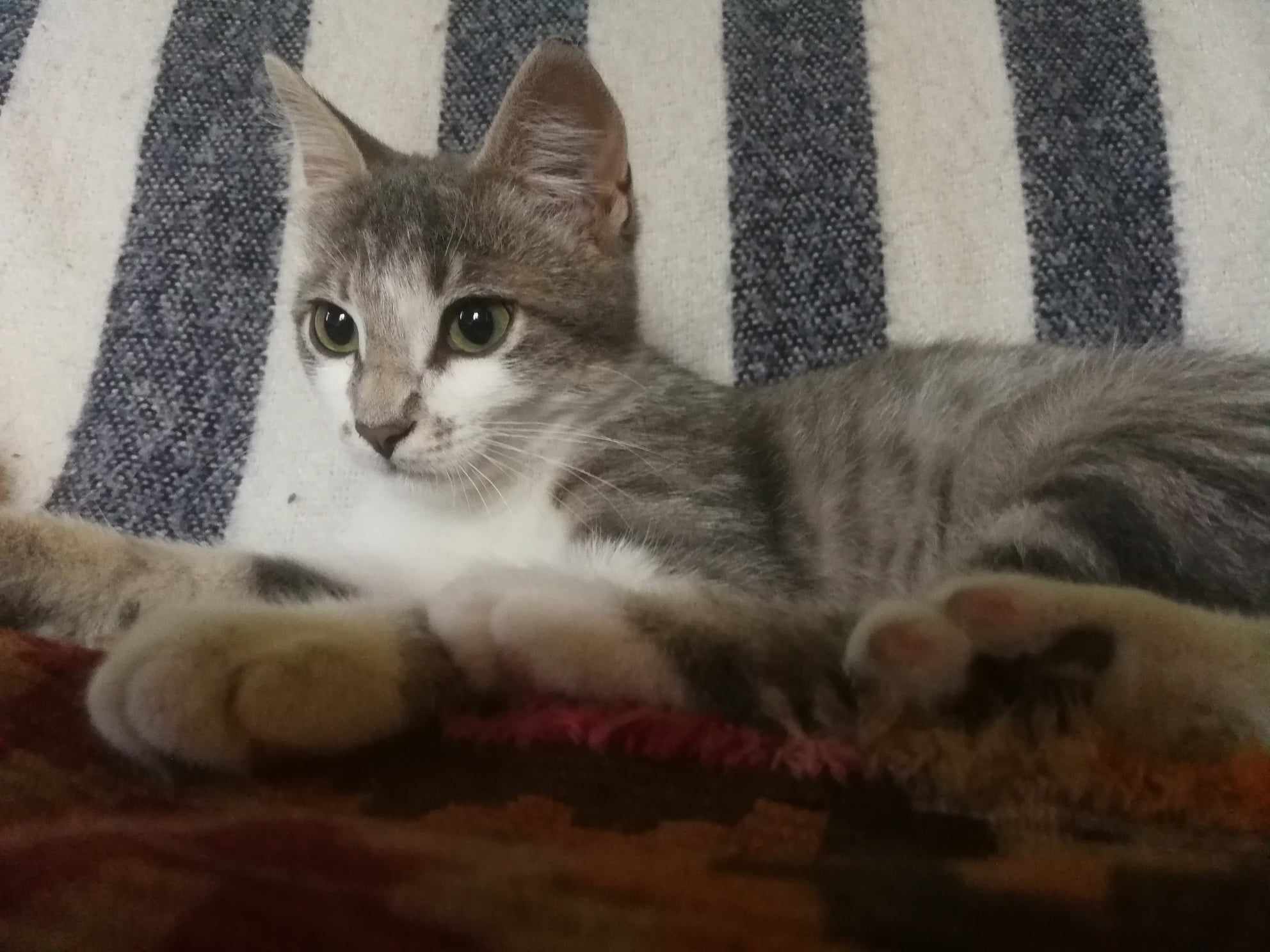
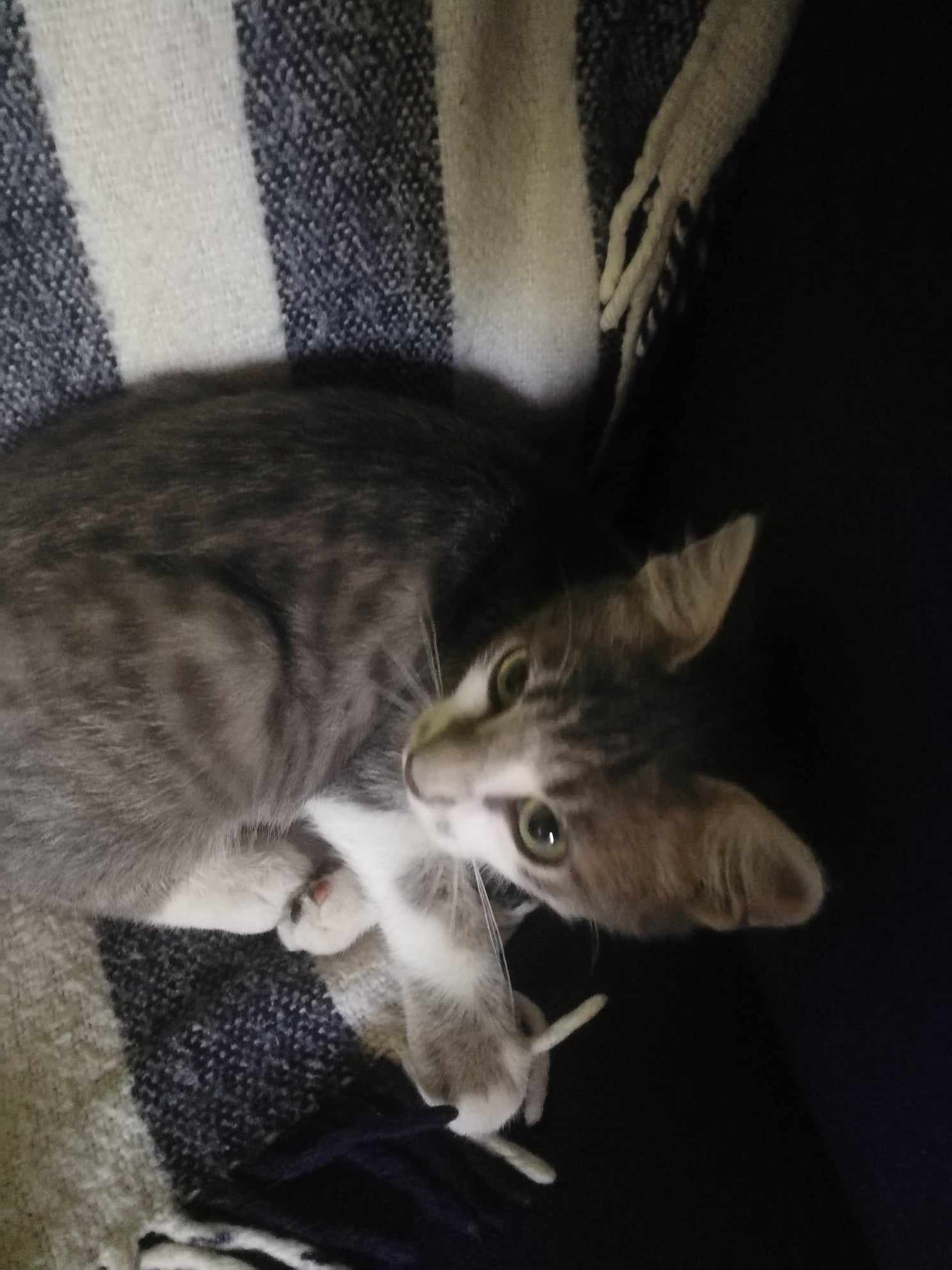
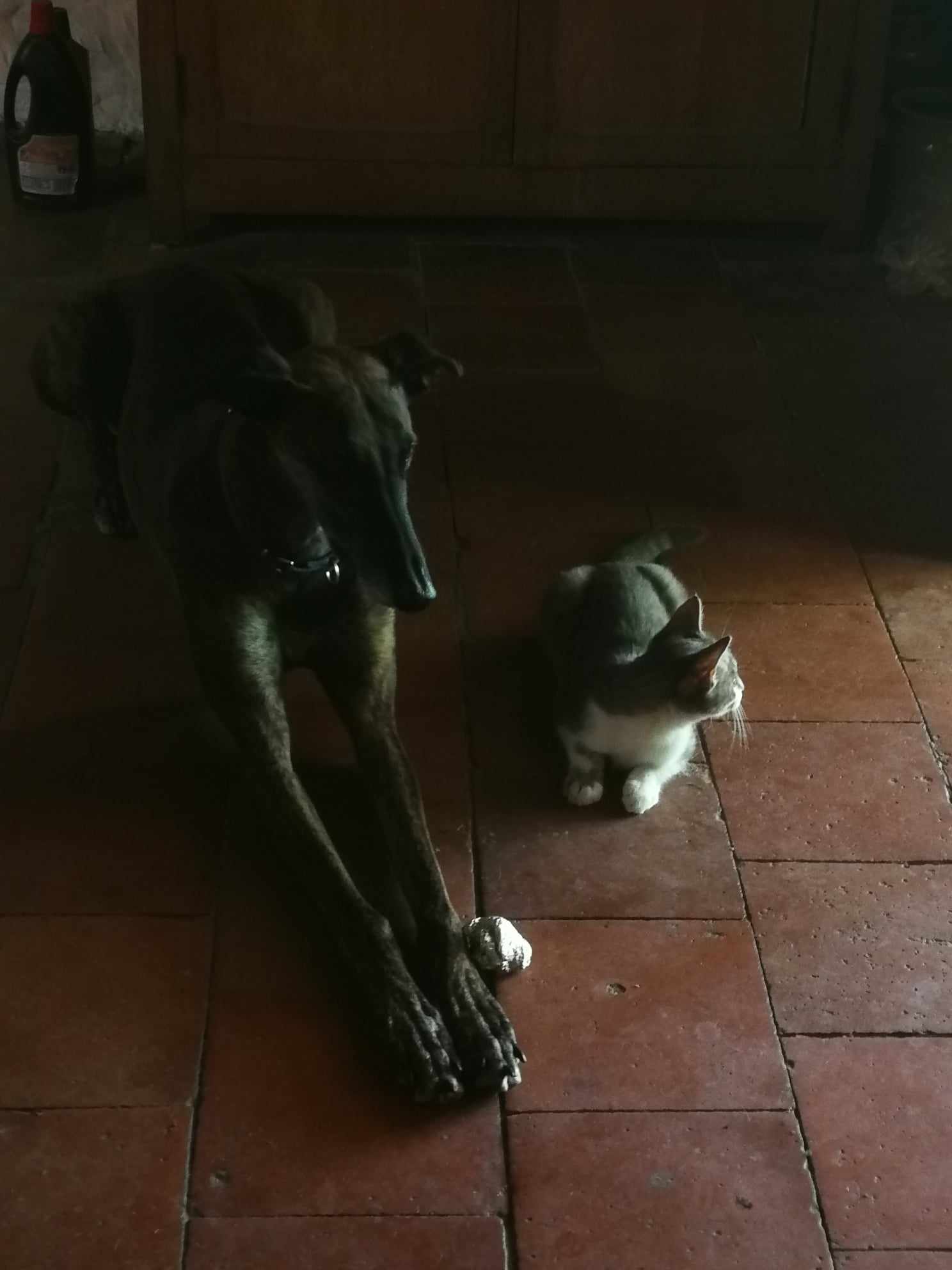
The little savage born in a field who inveigled her way into our house is turning it upside down. Fearless as only cats can be, assured of her superiority, dominating human and canine, she leaves a trail of destruction in her wake. Bix has accepted defeat, but Redmond still rises to the bait, playing snip-snap the hand and punch-in-the-face. Our hands, arms and ankles are longing for teething to be over and for her urge to subdue all that moves to pass.

New life leaves and loves
a whirlwind of learning
before the world ends.

Haibun for a canal walk

Haibun for a canal walk

The canal has two sides, one, picturesque, bordered by plane tree columns, bough-arched overhead, cycle track now, whizzing with wheels, gloves and dark glasses, walked by Sunday strollers, not too far from the car, the low buzz of conversation, soothing of fractious children, panting dogs.
The other, scarce-trod, is the overgrown tow-path overhung with oak and field maple, banks of tall purple weed flowers, shrubs full of birds, casting fish-shade. No one walks there, though there are no speeding cyclists who dislike slowing down or giving way, taking their mission of pedaling ever so seriously. There are no stern-faced walkers wielding big sticks, gaggles of families sprawling where children wander and cry and pedal on trikes.
There is no one to disturb the canal stillness, just the trees that once shaded plodding horses towing barges, the track barely visible, and birds that flit in and out of the cool, peaceful tree shadows.

Walking in silence
listening to fish mouthings
we learn peace.

Midsummer haibun

For dverse.

This spring of unstable weather, of political uncertainty, of loss of loved friends, coming storms and an unpredictable summer, we watch the sky with concern, our neighbours with consternation. Sun, that coaxes the growing things, sears and burns, rides to its zenith, and we wait with bated breath for the signs, a conquering king triumphant or a parent spreading joy with golden hands.

In ditch-cool grass grows
lush world where frogs laugh at storms
their distant rumble.

Haibun for a jay-walking sparrow

Waiting at the lights, we watched a sparrow hoping nonchalantly down the middle of the main road between the rushing lines of cars, pecking at tiny specks, oblivious of the danger. A break in the line, and I saw it was now hopping across the pedestrian crossing opposite, and I felt relief that it was being ‘sensible’, but the lights changed, we moved forward, and the sparrow stopped in the middle of the crossing, indifferent, not inclined to move, walk, fly out of the way. So we stopped, in the middle of the crossroads, holding up the traffic, while a sparrow pecked back and forth, in a black stripe then a white, hopped in front of the wheels, in the hot breath of the car, oblivious. When the klaxoning began behind, we moved forward slowly, the sparrow passed under the car, pecking still, as car after car raced over its determination to finish its meal.

Urban landscape
sounds like rubber on tarmac
and seeds settling.

Sunday culture

I didn’t take any photos, but here is the village website, English version, to situate is a bit.

We went to La Mas d’Agenais this morning to see the Rembrandt in the church. There was no one there except the statues and the painting, a crucifiction, nothing remarkable, except that it was painted by Rembrandt, and it’s hanging on the wall of a C11th village church in the Lot-et-Garonne. The painting is unremarkable but the church has the charm of small country churches where the statutes of saints, Sacred Hearts and Madonnas are what draws the eye. One in particular is rather touching, Mary holding the infant Jesus, a Mary dressed like a peasant with braided hair and no veil, holding a fat baby with the jowls of a bloodhound, the ugliest Jesus I’ve ever seen.

River runs heavy
slow the canal troubled green
silence of birdsong.

Walking into the storm

The NaPoWriMo prompt today is to write a sijo. I’ve never written one before, so I adapted a triolet I wrote yesterday, which in turn provoked a haibun to explain why I wrote the triolet. Here are all three.

Walking into the storm (haibun)

Yesterday I wrote a triolet. It had been storming all afternoon, thunder, lightning, high wind, heavy cloud and intermittent downpours of rain and hail. Redmond pestered and pestered to go out for a walk, so in the end I put on rubber boots, raincoat and took the pair of them out, across the meadow, to walk along the stream under the trees. Needless to say, Redmond soon decided this wasn’t exactly what he meant, and Bix got into a state of high anxiety. Both of them bolted for home the last stretch of the way, and waited by the stove to be towelled dry. The triolet came after.

so much green air
squeezed from heavy cloud
rivulets leaping

Walking into the storm (triolet)

We walked into a storm today,
the sky was dark, the wind was high;
I called to you, you wouldn’t stay.
We walked into a storm today,
You hunched your shoulders, turned away;
You might at least have said goodbye.
We walked into a storm. Today,
the sky turned dark, the wind too high.

Walking into the storm (sijo)

We walked into a storm today,
the sky was dark, the wind was high.

I called to you, you wouldn’t stay,
just hunched your shoulders, walked away.

I never thought the storm that broke
would be the one that meant goodbye.